


Stainless Steel. Any of You Ever Hear of Thermal Conductivity?

It is common belief that the metals are conductors of heat. But not all metals are good conductors in the same way. The characteristic depends on the type of metal. The thermal conductivity of materials. What can we infer from the following table? The values of thermal conductivity of various metals. METALS Conductivity /W/(cm °C) […]
Dynamic Loads. The Resistance of Stainless Steel Screws.
Screws are notched components. Why are they considered as such? For their threading. And where the screws are subjected to repeated and irregular stress? In some cases the break occurs in the first load-bearing part of the thread, at the entry into the internal (female) thread. (in 90%) What is it necessary for the design? […]
Surface Pressure Under the Screw Head. How to Reduce It?
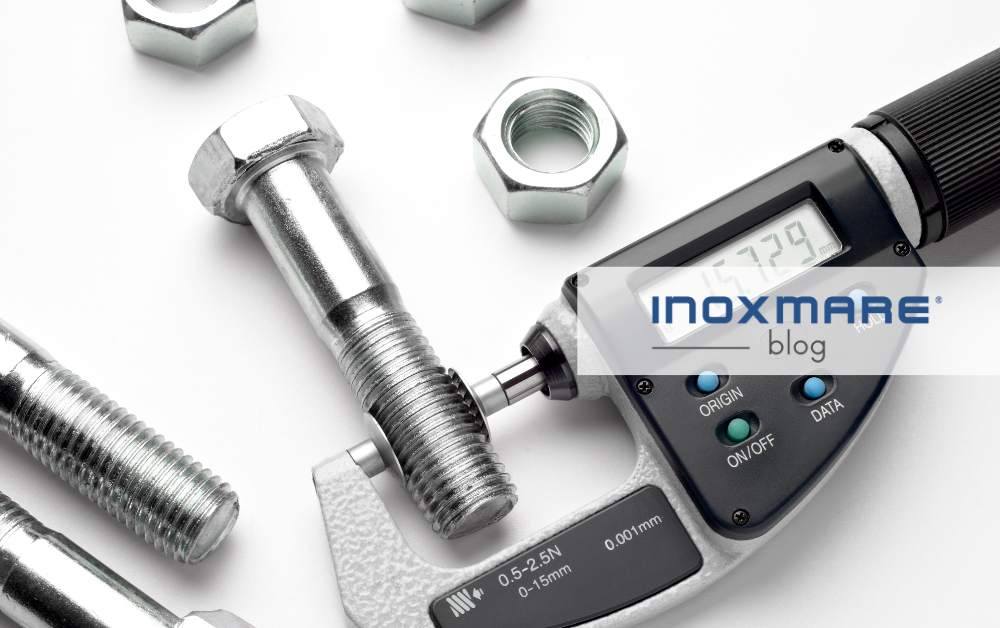
The allowable bearing pressure for a given material cannot be defined with absolute precision. Several factors play a key role in determining it: How Can Bearing Pressure Be Reduced? Bearing pressure can be reduced by adopting the following measures: Flange Bolts and Flange Nuts: What Are the Benefits? The main advantages include: Using flanged fasteners is generally a more effective solution than using large washers placed under standard bolts and nuts. […]
Marking of Stainless Steel Fasteners
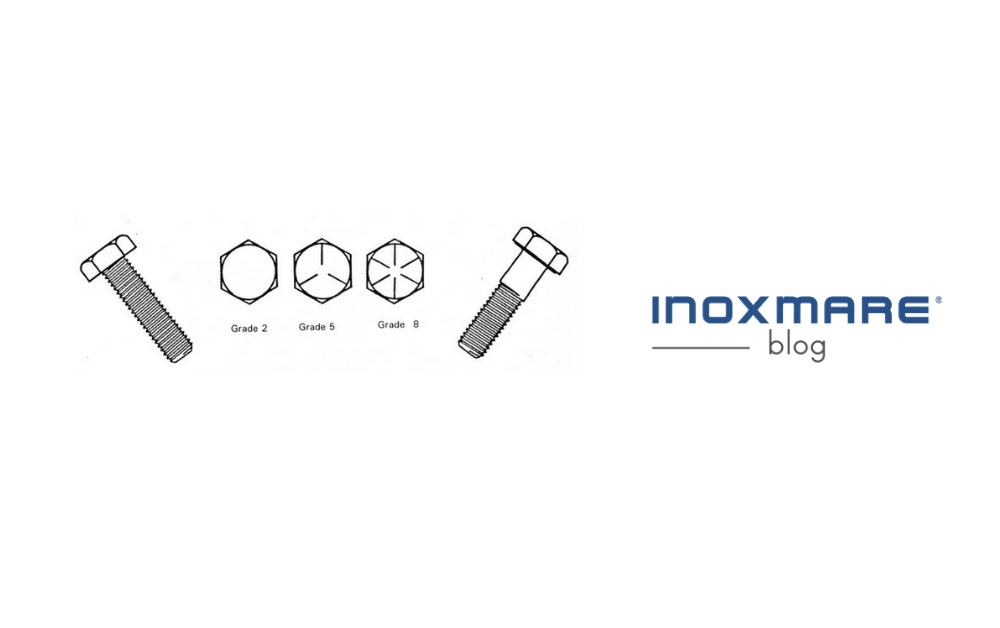
The revised standard for the application for bolts, screws and studs with specified property classes (coarse thread and fine pitch thread) came into force on April 2009. The marking of fasteners according to ISO 898 Identification with the manufacturer’s mark and the property class is mandatory for: Marking of bolts and screws are preferably on […]
Stainless Steel. Chemical Stability.

Austenitic steels A1, A2 and A4 obtain their resistance to corrosion through a surface protective layer of oxide. When the surface protective layer is damaged If the surface protective layer is damage it uses atmospheric oxygen to regenerate itself. If access to atmospheric oxygen is blocked: Then even these steels will corrode. Some general […]
Not Only Tensile Strength..
After having addressed the issue of yield and tensile strength in one of our previous blog post. Secondly, there is the matter of elongation at fracture A, the tensile strength under wedge loading and head soundness. Elongation at fracture A [%] It is the permanent elongation measured on the fractured specimen related to the original measured […]
How to Prevent the Galvanic Corrosion?
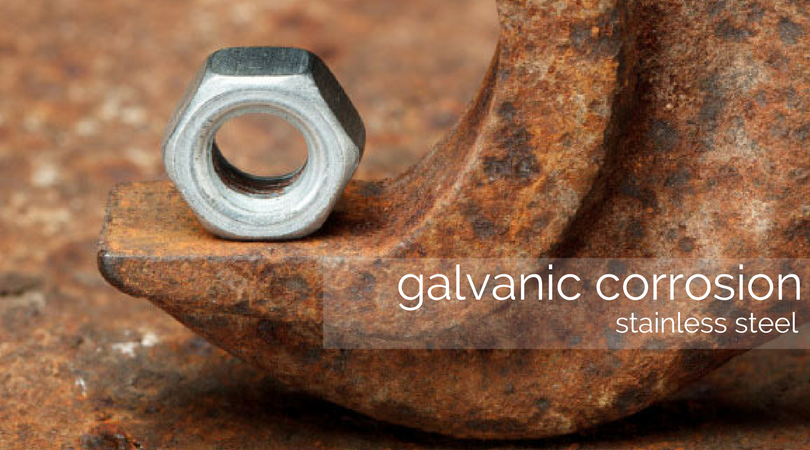
Galvanic corrosion. When (for external application) we match stainless steel with other metals it is appropriate that they be separated by an non-metallic insulator. For example, including neoprene or nylon. Why do this? To avoid the risk of galvanic corrosion.
Stainless Steel. How to Clean It?
In today post we face the taking care and maintenance of stainless steel items, surfaces and finishes. Finishes for exterior environments. To do it or not? Rainwater is beneficial to cleaning stainless steel. The fixtures for outdoor applications, (decorated or directional) should therefore be oriented in such a way as to facilitate the draining of […]
Bonding and Welding of Stainless Steel

Stainless steel can be joined to other materials using different methods, each with its own characteristics and advantages. Bonding Stainless Steel Stainless steel can be bonded to other materials using several types of adhesives, including: Choosing the most suitable adhesive depends on several factors, such as: In general, a rough surface finish improves adhesive performance, […]
Fastener Fair Stuttgart 2017. What Are You Waiting For?

It’s a month away the 7th Fastener Fair Stuttgart. It will be the central meeting point for specialists of the fastener and fixing industry. A great opportunity to build successful business relationships. An appointment dedicated to screws, bolts and fasteners.