


Water Cycle. Why Choose Stainless Steel?

In this post we will discover why stainless steels are used during the water cycle. In particular what are those who find increased use. How to choose the type of steel? What are the basic parameters for choosing the right type of steel? Here are the determining factors: Austenite series stainless steels are most commonly […]
DIN 3506-3: Hardness Class. It Doesn’t Add Up!
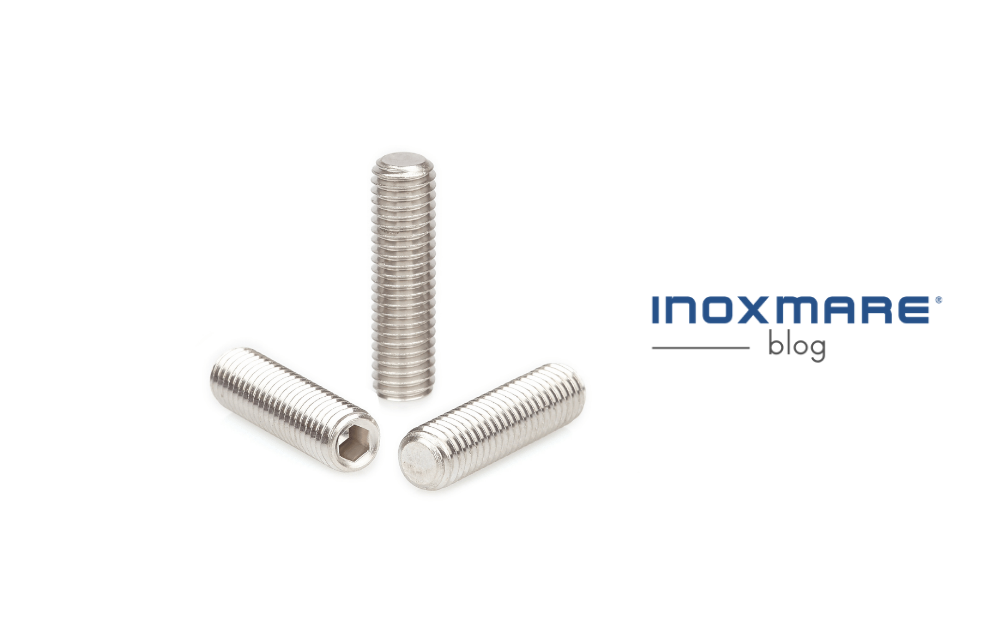
Today we would like to bring to your attention a controversial topic. We are talking about stainless steel hexagon socket set screws. The preconditions We acting on the assumption that hexagon socket set screws don’t have head, quality tests doesn’t provide the resistance measuring. They are distinguished in the following hardness classes: Please find below […]
Austenitic Stainless Steel Fasteners. Why Use Them? PART II
Here is the second part of our post on austenitic steel connection elements. What are the advantage of using them? Temperature resistance Austenitic steel has good resistance to temperature. For connection parts galvanized the Chromating is destroyed at temperatures above 80°C. So drastically reduce the corrosion resistance. Maintenance Austenitic steel screws and nuts are raw. […]
Austenitic Stainless Steel Fasteners. Why Use Them? PART I
Today we are talking about what technical topics for the use of austenitic steel fasteners. Also the avoidance of potential problems. Here are some advantages The surface of austenitic steels is shiny and of good appereance. In fact, a connecting element that does not rust will donate aesthetic perfection. In addition to aesthetics, austenitic steels […]
Stainless Steel. Chemical Stability.

Austenitic steels A1, A2 and A4 obtain their resistance to corrosion through a surface protective layer of oxide. When the surface protective layer is damaged If the surface protective layer is damage it uses atmospheric oxygen to regenerate itself. If access to atmospheric oxygen is blocked: Then even these steels will corrode. Some general […]