


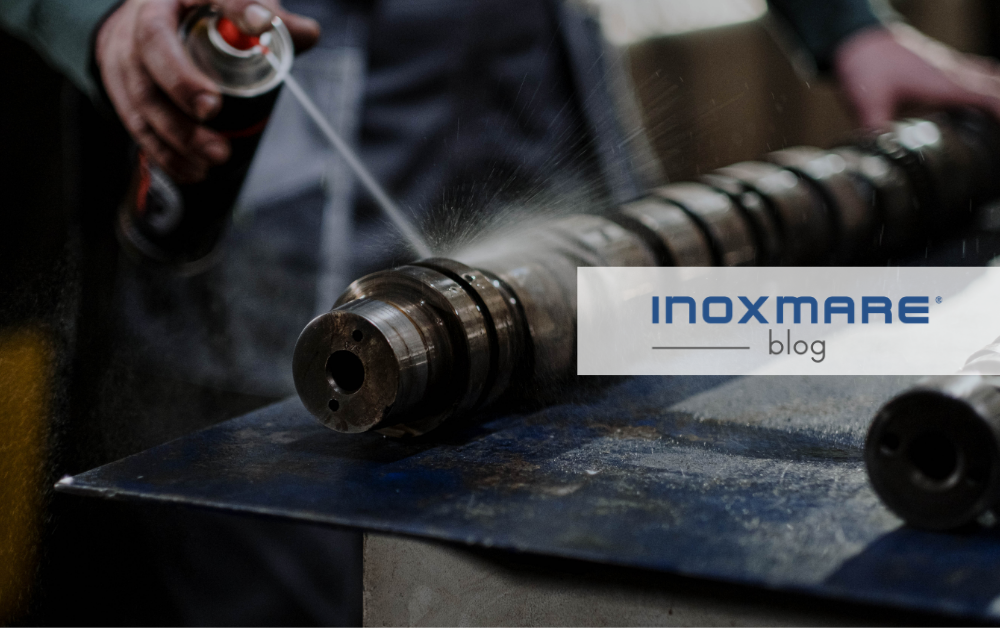
Hot-processing operations such as forging, rolling, welding, and heat treatment generate surface oxidation on carbon steels, alloy steels, and stainless steels. This oxidation layer, commonly known as “scale” or “mill scale”, must be removed because it can create problems during stamping and drawing operations.
The presence of scale may compromise the corrosion resistance of the material.
The most common surface cleaning methods will be discussed in this week’s two articles.
Degreasing
Before pickling or welding operations, it is essential to remove any lubricants, oils, or grease residues from the surface of the material.
Compounds used during processes such as deep drawing or redrawing can be removed using:
- carbon tetrachloride
- trichloroethylene
- alkaline cleaning solutions
- fine abrasive powders
After cleaning, the material must always be thoroughly rinsed to eliminate any remaining residues.

Sandblasting
Sandblasting is generally not recommended for stainless steel products, except in specific cases such as castings or forgings with heavy surface scale deposits.
When sandblasting is necessary, extremely fine sand or grit materials should be used in order to minimize surface damage and contamination.
After the operation, it is advisable to carry out a decontamination and passivation treatment to restore the corrosion resistance of the stainless steel surface.
Find our webshop!
Click on the link below to access to our web shop. You can choose the most suitable items to your customers needs.
Want to read more? Click here