


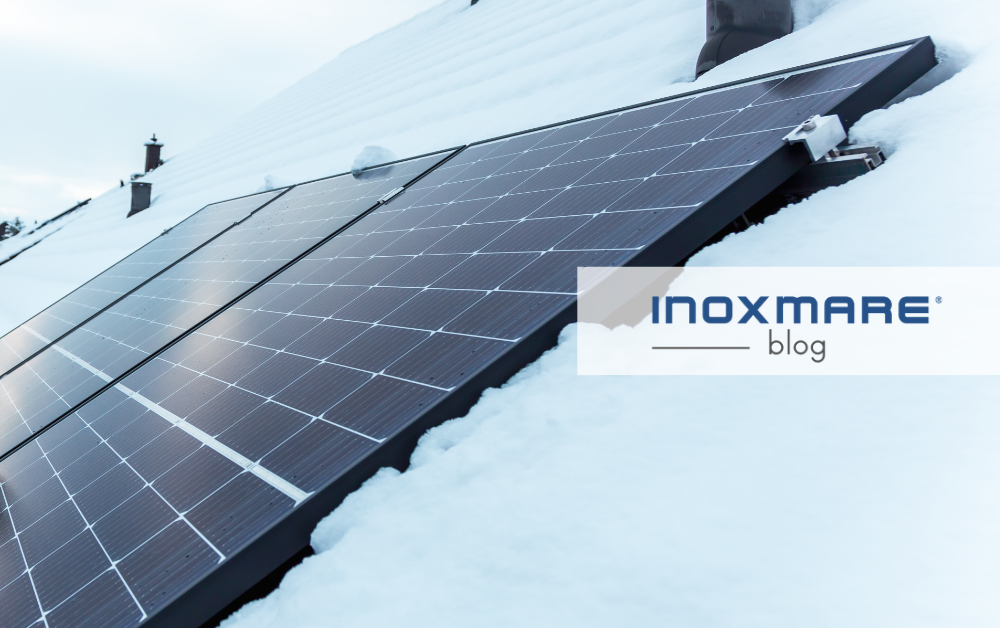
Winter is coming and many of our customers are asking us some questions about snow load. Below, you can find some useful information especially about photovoltaic systems.
What is the snow load?
The snow load is a variable climate action affecting buildings. It depends on many factors: climate, topography, geographical location and shape of the building. It could also depend on the transmission of heat of the roof.
Snow load acts as a vertical load related to the horizontal projection of the roof surface. The density and weight of snow depends on the temperature.
The parameters: the coefficient of shape of the roof
The shape of a building coverage is a very important parameter for the snow load, considered according to the coefficient μ. This coefficient considers, for example, the fact that the snow slides off more easily on a steep or a flat roof. It may also consider a change in the slope of the roof (for example in a shed) coverage.
The coefficient μ approximates the relationship between:
- the quantity of snow that remains on the roof
- the amount of falling snow.
An example: the photovoltaic systems

Snow on photovoltaic panels. What is holding them? Snow can be a danger to the load it exerts on the panels. In the data sheets of the product the maximum load of the front of the panel is always indicated. This parameter indicates the “snow load” of the photovoltaic module. All the solar panels must be certified according to a specific international standard; this ensures the suitability of the modules for installation even in areas with high accumulation of snow and ice.
Find our webshop!
Click on the link below to access to our web shop. You can choose the most suitable items to your customers needs.
Want to read more? Click here