


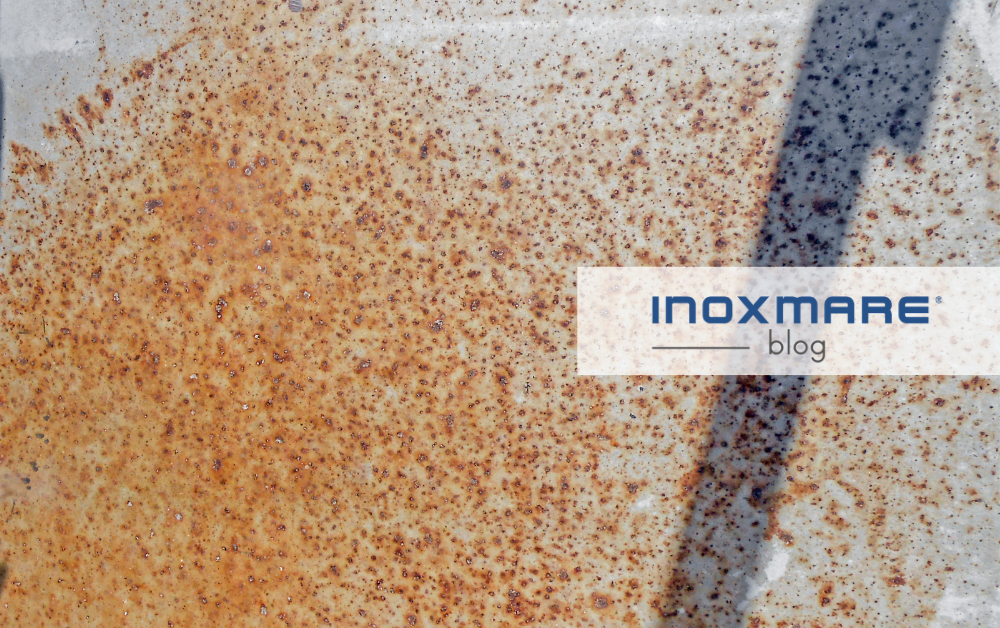
The corrosion resistance of stainless steel can be affected by steel contamination, a consequence of carbon steel cutting, grinding and welding operations.
Steel contamination. What happens?
The presence of contamination on the metal surface creates:
- An aesthetic defect
- Localized corrosion (called “pitting“), even just in case of contact with air, it may affect the right condition of inertia (long-term)
The iron particles which are deposited on the surface of stainless steel will oxidize very quickly and form rust. This could also happen just with atmospheric moisture causing anunaesthetic staining of the surface, which in some cases can develop an apitting phenomenon, thus hindering the passivation of stainless steel. A practical example? The welding splashes of carbon steel components.
And now? How do we work the stainless steel?
How to work the carbon and stainless steel? Here are some useful advices:
- Carry out the machining of the two steels in two distinct and separate areas;
- Use manual tools (like brushses) and equipment (like presses) not containing carbon steel;
- Clean the hand tools and the machines before moving to stainless steel;
- The cutting, welding or blasting should not be made with elements that contain carbon steel (like abrasive discs, electrodes, shot etc.)
- During storage and handling of stainless steel avoid any contact with carbon steel tools (forklift trucks, chains, shelves)
No steel contamination. What to do?
There are specific tests in order to verify the contamination occurred.
But how to decontaminate the stainless steel? Through a treatment with specifc passivating pastes based on phosphoric or nitric acid. To remove all the traces of acid solution and dissolved contaminants, it will be necessary to rinse the steel with deionized water, then dry the clean side. To avoid a patchy effect, it is recommendend to treat the entire surface.
You can also use these products for:
- Oxidation due to high exposure to corrosive agents (for example saltiness)
- Contamination by non-steel metals (for example: aluminum, copper, lead etc.)
Find our website!
Click on the link below to access to our web shop. You can choose the most suitable items to your customers needs.
Want to read more? Click here