


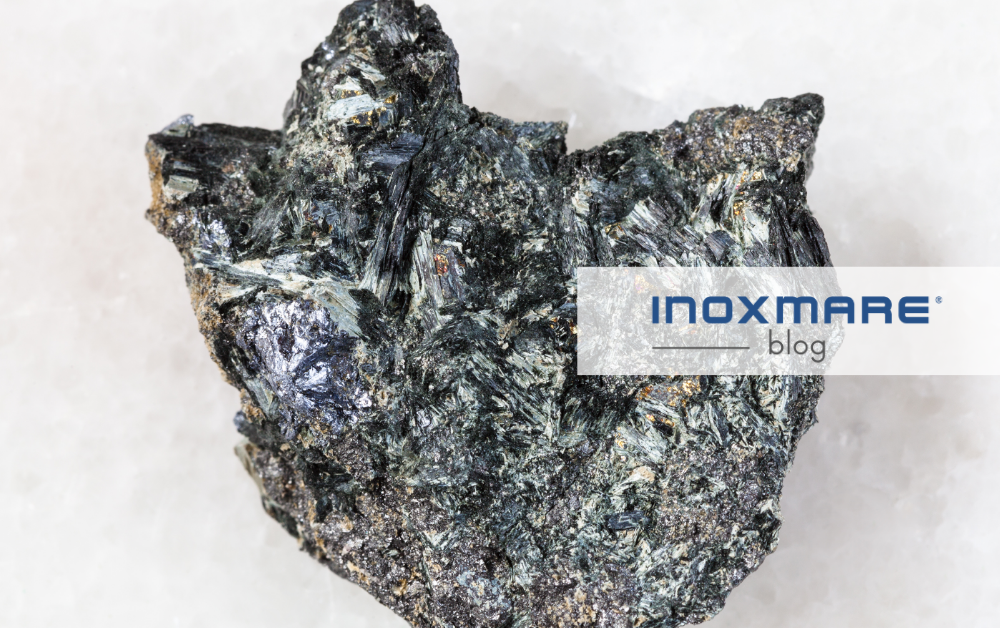
In 1781 the Swedish chemist Peter Jacob Hjelm was able to isolate the molybdenum from its oxide. In fact, this element in nature is present in “molybdenite” usually in the form of sulfide MoS₂ (similar to graphite and lead sulphide).
What is molybdenum?
Molybdenum is defined a transition metal. What are its characteristics? Here is some interesting information:
- it is silvery-white
- belongs to the 6° Group
- it is moderately reactive (reacting with oxygen only at temperatures above 600° C and not at room temperature).
How you get molybdenum in metallic state?
Up until now we have spoken of molybdenum in their natural state, but how do you get in its metal state? At the industrial level, you can get it through the reaction of molybdenum disulfide and oxygen at 700° C. How is it done in practice? Thanks to the reduction of hydrogen oxide. We see the process more closely:
- first phase: to 600-700 °C for the high volatility
- second phase: about to 1000 °C.
How is it being used?
Thanks to its high melting point (about 2623° C), it is used for the production of
- electrodes for glass melting furnaces
- missile parts
- aircraft parts.
In addition to these applications, molybdenum may be used in the nuclear field. What is the most common use of molybdenum? Mostly this is used in the production of alloys and high-strength steels. Along with nickel and chrome it is able, for example, to form extremely heat-resistant alloys and also with corrosion resistance, with high tensile strength.
A curiosity
Molybdenum is also used in pigments, creating colours ranging from deep yellow to bright orange, used within paints and inks. The orange made with molybdenum, for example, is also used in tempera and oil paints, due to its very good hiding power.
Find our webshop!
Click on the link below to access to our web shop. You can choose the most suitable items to your customers needs.
Want to read more? Click here